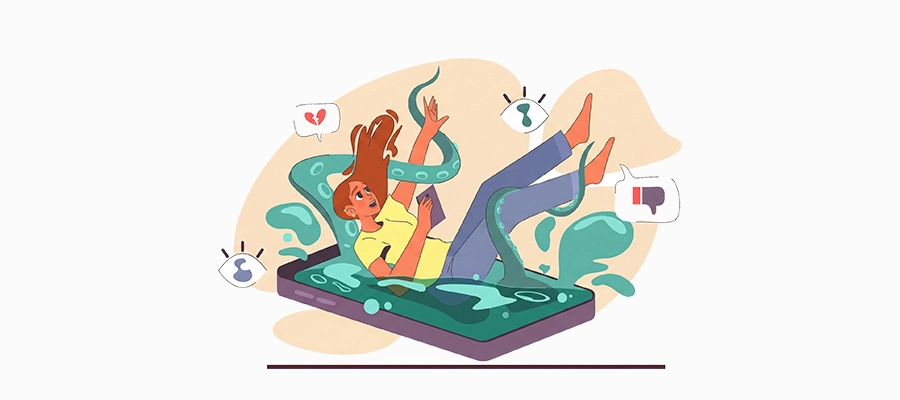

Internet addiction can be understood as a behavioural addiction marked by difficulty regulating internet use. Individuals may find themselves drawn to going online in a compulsive way, continuing the behaviour even when it begins to interfere with daily life, relationships, or wellbeing. Importantly, the concern is not only the amount of time spent online, but the sense of loss of control around specific activities such as gaming, social media use, or online shopping.
While internet addiction is not universally recognised as a formal mental health diagnosis, it shares many characteristics with other behavioural addictions. Mental health professionals may use structured assessments, including internet addiction screening tools, to understand the severity of the concern and guide an appropriate treatment approach. The behaviour is also commonly described using terms such as digital addiction or internet use disorder.
Becoming aware of early signs is an important step toward change and recovery.
Common indicators may include:
- Spending increasing amounts of time online, often at the expense of sleep, work, or daily responsibilities
- Feeling anxious, irritable, or low when unable to access the internet
- Making repeated attempts to cut back without lasting success
- Gradually withdrawing from offline activities, interests, or relationships
- Using the internet to cope with stress, emotional distress, or low mood
- Minimising or concealing the extent of internet use from others
Risk factors include:
- Feelings of loneliness or isolation
- Adverse life events, such as bullying or job stress
- Preoccupation with online activities like online gaming or social media
- Family history of addiction
The anonymity of the internet and the immediate gratification it offers can reinforce addictive behaviours. For some, the internet becomes a primary means of escape from emotional discomfort. Creating structured digital habits is another essential component in reshaping your relationship with the internet. This can include scheduling screen-free times, using apps to monitor and limit time on the internet, setting tech-free zones within the home, and making time for offline hobbies or physical activity. These consistent, practical changes help reduce excessive internet use and support lasting recovery.