
Introduction
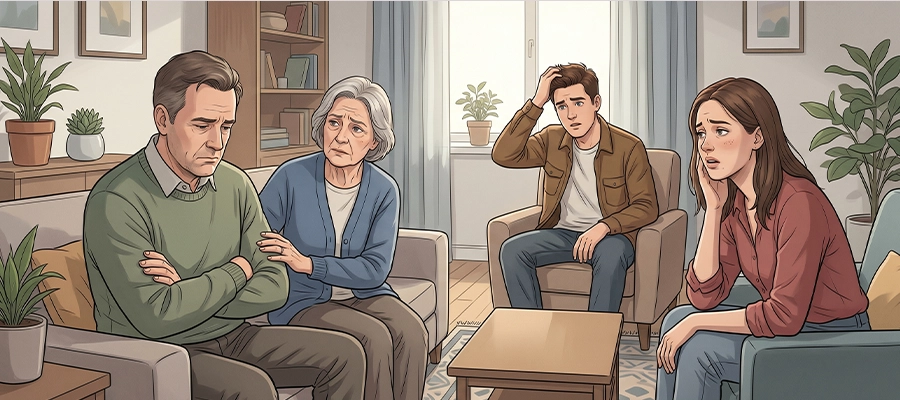
Mental health difficulties rarely occur in isolation. The impact of psychiatric symptoms extends beyond the individual experiencing them and often permeates the entire family system. When a psychiatric condition remains undiagnosed, family members are left to navigate complex emotional, relational, and psychological challenges without a clear understanding of the underlying cause. The absence of a diagnosis often results in confusion, strained relationships, chronic stress, and emotional exhaustion. While considerable attention has been devoted to understanding the experiences of individuals living with mental illness, the psychological burden borne by family members remains comparatively underexplored (Perlick et al., 2007).
A Family Systems Perspective
Family Systems Theory posits that families function as interconnected emotional units, wherein changes in one member inevitably influence the functioning of the entire system (Bowen, 1978). From this perspective, psychiatric symptoms cannot be understood solely as an individual's problem but rather as a phenomenon that affects family relationships, communication patterns, and emotional processes. When a psychiatric condition remains undiagnosed, families often struggle to interpret and respond effectively to behavioral and emotional changes. In attempting to restore balance, family members may unconsciously adopt new roles, such as becoming caregivers, mediators, protectors, or scapegoats. Although these adaptations are often well-intentioned, they may contribute to role rigidity, emotional fusion, and relational strain (Nichols & Davis, 2020).
The Emotional Landscape: An Upsurge of Complex Emotions
Living alongside unexplained psychiatric symptoms frequently evokes confusion, frustration, helplessness, guilt, fear, and chronic anxiety. Family members often report feeling trapped between wanting to support their loved one and struggling to manage their own emotional well-being (Saunders, 2003). The unpredictability of symptoms may result in hypervigilance, a state characterized by heightened monitoring of emotional and behavioral cues to prevent potential crises. Over time, such persistent vigilance can contribute to elevated stress levels, sleep disturbances, and emotional exhaustion.
Ambiguous Loss: Grieving Someone Who Is Still Present
Boss (1999) introduced the concept of ambiguous loss to describe situations in which a loved one is physically present but psychologically absent. Families living with an undiagnosed psychiatric condition frequently experience this form of loss as they witness profound changes in personality, behavior, or emotional availability. Unlike conventional bereavement, ambiguous loss lacks closure and certainty, making it difficult for family members to process their grief. As a result, they may experience persistent feelings of sadness, longing, confusion, and emotional paralysis (Boss, 2006).
Caregiver Burnout and Chronic Psychological Stress
Caregiver burden encompasses the emotional, physical, financial, and social challenges associated with supporting an individual experiencing illness or disability (Zarit et al., 1980). Families caring for a loved one with an undiagnosed psychiatric condition often face additional burdens due to uncertainty regarding the nature of the symptoms, delayed access to treatment, and the stigma surrounding mental illness. Research has consistently demonstrated that caregiving stress is associated with increased risks of depression, anxiety, reduced quality of life, and physical health difficulties (Awad & Voruganti, 2008). The chronic demands of caregiving may lead family members to neglect their own needs, increasing vulnerability to burnout and psychological distress.
Expressed Emotion and Family Dynamics
The concept of Expressed Emotion (EE) has been widely studied within psychiatric research and refers to critical comments, hostility, and emotional overinvolvement expressed by family members toward an individual experiencing mental illness (Hooley, 2007). When symptoms remain unexplained, family members may attribute problematic behaviors to personal choices or character flaws rather than underlying psychopathology. Such interpretations can increase frustration and contribute to elevated levels of criticism or emotional reactivity. Research suggests that high expressed emotion environments are associated with poorer outcomes for individuals experiencing severe mental illness and greater distress among caregivers (Butzlaff & Hooley, 1998). Importantly, high EE often reflects accumulated stress and emotional fatigue rather than a lack of care or concern.
Compassion Fatigue: The Cost of Caring
Compassion fatigue describes the emotional and psychological depletion that results from prolonged exposure to another person's suffering (Figley, 1995). Family members who provide ongoing emotional support often absorb significant amounts of distress while receiving little opportunity for recovery. Symptoms of compassion fatigue may include emotional numbness, irritability, hopelessness, reduced empathy, and feelings of detachment. Individuals frequently report guilt regarding these reactions, despite their origins in prolonged caregiving demands (Figley, 2002).
A Trauma-Informed Perspective
Trauma-informed approaches emphasize understanding the effects of chronic stress, unpredictability, and emotional overwhelm on individuals and systems (Substance Abuse and Mental Health Services Administration [SAMHSA], 2014). Families living with persistent uncertainty surrounding a loved one's mental health may develop trauma-related responses, including hypervigilance, emotional dysregulation, avoidance behaviors, and heightened anxiety. A trauma-informed perspective reframes these responses as adaptive survival mechanisms rather than personal shortcomings, promoting empathy and reducing blame. This perspective encourages mental health professionals to consider not only the needs of the identified client but also the cumulative impact of stress and uncertainty on the family system.
Conclusion
Living with a family member who has an undiagnosed psychiatric condition can be a profoundly challenging experience characterized by emotional upheaval, chronic uncertainty, and psychological strain. Recognizing and addressing the experiences of family members is essential for fostering resilience, reducing stigma, and promoting holistic mental health care. Effective intervention requires supporting both the individual experiencing symptoms and the family members who silently bear the emotional consequences of living in the shadow of uncertainty.
References
- Awad, A. G., & Voruganti, L. N. P. (2008). The burden of schizophrenia on caregivers: A review. Pharmacoeconomics, 26(2), 149-162.
https://doi.org/10.2165/00019053-200826020-00005 - Boss, P. (1999). Ambiguous loss: Learning to live with unresolved grief. Harvard University Press.
- Boss, P. (2006). Loss, trauma, and resilience: Therapeutic work with ambiguous loss. W. W. Norton & Company.
- Bowen, M. (1978). Family therapy in clinical practice. Jason Aronson.
- Butzlaff, R. L., & Hooley, J. M. (1998). Expressed emotion and psychiatric relapse: A meta-analysis. Archives of General Psychiatry, 55(6), 547-552.
- Figley, C. R. (1995). Compassion fatigue: Coping with secondary traumatic stress disorder in those who treat the traumatized. Brunner/Mazel.
- Figley, C. R. (2002). Compassion fatigue: Psychotherapists' chronic lack of self-care. Journal of Clinical Psychology, 58(11), 1433-1441.
- Hooley, J. M. (2007). Expressed emotion and relapse of psychopathology. Annual Review of Clinical Psychology, 3, 329-352.
- Nichols, M. P., & Davis, S. D. (2020). Family therapy: Concepts and methods (12th ed.). Pearson.
- Perlick, D. A., Rosenheck, R. A., Miklowitz, D. J., Chessick, C., Wolff, N., Kaczynski, R., Ostacher, M., Patel, J., Desai, R., & STEP-BD Family Experience Study Group. (2007). Caregiver burden and health in bipolar disorder. Bipolar Disorders, 9(3), 262-273.
- SAMHSA. (2014). SAMHSA's concept of trauma and guidance for a trauma-informed approach (HHS Publication No. SMA 14-4884). Substance Abuse and Mental Health Services Administration.
- Saunders, J. C. (2003). Families living with severe mental illness: A literature review. Issues in Mental Health Nursing, 24(2), 175-198.
- Zarit, S. H., Reever, K. E., & Bach-Peterson, J. (1980). Relatives of the impaired elderly: Correlates of feelings of burden. The Gerontologist, 20(6), 649-655.