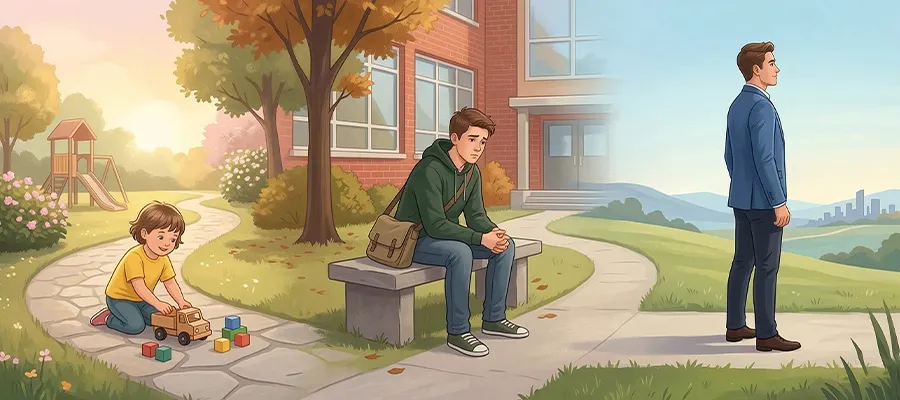

Adolescence is a pivotal stage of human development, often described as the bridge between childhood and adulthood. It is a stage where identities, emotions and relationships are constantly reframed, sometimes sharply, sometimes softly blurred. This is a critical developmental stage where identity, autonomy, and emotional regulation are tested.. While this journey can be exciting and full of potential, it also brings challenges that may overwhelm teenagers if not properly understood and supported.
Emotional Conflicts in Adolescence
- Identity vs. Role Confusion: Struggling to answer “Who am I?” while experimenting with values, beliefs, and roles (Steinberg, 2014).
- Autonomy vs. Dependence: Seeking independence yet still relying on parents for guidance and support.
- Peer Pressure vs. Self-Expression: Balancing the desire to fit in with the need to remain authentic.
- Emotional Intensity: Experiencing heightened mood swings due to hormonal changes and brain development (Casey, Jones, & Hare, 2008).
- High Risk-Taking and Impulsivity: Adolescents often engage in thrill-seeking behaviors—such as reckless driving, unsafe social media use, substance experimentation, or defiance of authority—driven by underdeveloped impulse control and peer influence (Steinberg, 2014). While some risk-taking is part of normal exploration, excessive or dangerous behaviors can signal deeper emotional difficulties.
Teenagers face a range of emotional conflicts as they navigate their evolving identities and relationships. These include:
These conflicts may manifest as irritability, withdrawal, risk-taking, or heightened sensitivity to criticism. Recognizing them early is key to providing timely support.
Identifying At-Risk Teenagers
Not all adolescents cope with these transitions smoothly. Some may be more vulnerable to emotional distress or maladaptive behaviors. Warning signs of at-risk teenagers include:
Protective Factors
While risks are real, many adolescents demonstrate resilience when supported by positive influences. Protective factors that buffer against emotional difficulties include:
- Strong family bonds and open communication
- Supportive peer relationships
- Healthy coping outlets such as sports, arts, or mindfulness
- Community and cultural support that fosters belonging
- Access to professional help and counseling (World Health Organization, 2021) By strengthening these protective factors, families and communities can help adolescents navigate challenges more safely and confidently.
Coping Strategies and Support
Helping adolescents cope requires a multi-layered approach involving families, schools, and communities. Effective strategies include:
- Encouraging open communication and emotional expression
- Validating their struggles rather than dismissing them as “just a phase”
- Promoting hea
- Promoting healthy outlets like journaling, sports, or creative arts
- Providing guidance and boundaries while respecting independence
- Facilitating peer support programs and group discussions
- Offering professional counseling to build coping skills and emotional regulation
Adolescence is a transformative journey filled with both opportunities and challenges. Emotional conflicts, impulsive behaviors, and risks such as suicide highlight the importance of early identification and compassionate support. By nurturing protective factors and equipping teenagers with healthy coping strategies, we empower them to grow into resilient, confident adults. Supporting adolescents is not only about preventing difficulties-it is about fostering their potential and guiding them toward a brighter future.
References
- Casey, B. J., Jones, R. M., & Hare, T. A. (2008). The adolescent brain. Annals of the New York Academy of Sciences, 1124(1), 111–126. https://doi.org/10.1196/annals.1440.010 https://doi.org/10.1196/annals.1440.010 (doi.org in Bing)
- Fonseca-Pedrero, E., Al-Halabí, S., Pérez-Albéniz, A., & Debbané, M. (2022). Risk and protective factors in adolescent suicidal behaviour: A network analysis. International Journal of Environmental Research and Public Health, 19(3), 1784. https://doi.org/10.3390/ijerph19031784 (doi.org in Bing)
- Richardson, R., Connell, T., Foster, M., Blamires, J., Keshoor, S., Moir, C., & Zeng, I. S. (2024). Risk and protective factors of self-harm and suicidality in adolescents: An umbrella review with meta-analysis. Journal of Youth and Adolescence. https://doi.org/10.1007/s10964-024-01969-w (doi.org in Bing)
- Sawyer, S. M., Azzopardi, P. S., Wickremarathne, D., & Patton, G. C. (2018). The age of adolescence. Lancet Child & Adolescent Health, 2(3), 223–228. https://doi.org/10.1016/S2352-4642(18)30022-1 (doi.org in Bing)
- Steinberg, L. (2014). Age of opportunity: Lessons from the new science of adolescence. Houghton Mifflin Harcourt.
- World Health Organization. (2021). Adolescent mental health. Retrieved from https://www.who.int/news-room/fact-sheets/detail/adolescent-mental-health (who.int in Bing)