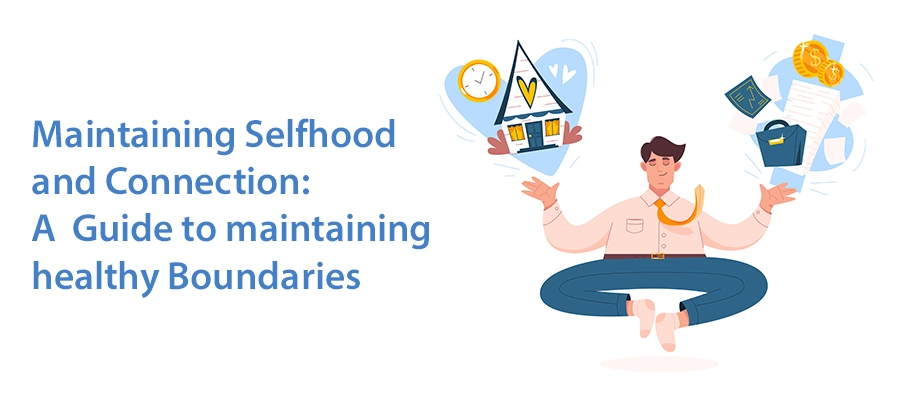

When we imagine a strong and fulfilling relationship, we often think of love, closeness, and support. What many people overlook is that healthy boundaries are just as important as affection. Boundaries are the invisible lines that define where one person ends and another begins. They help protect your individuality while still allowing connection. In psychology, boundaries are closely linked with concepts such as autonomy, self-concept, and emotional regulation. Autonomy refers to your ability to make your own decisions, self-concept is the way you understand and value yourself, and emotional regulation is your capacity to manage feelings without being overwhelmed by the emotions of others. Without boundaries, these psychological processes become blurred, often leading to distress and conflict.
Boundaries play several crucial roles in a relationship. They prevent resentment by ensuring you do not continually say yes to things that make you uncomfortable or drain your energy. They protect mental health by creating a filter against emotional overload, which reduces stress, anxiety, and exhaustion. Boundaries also establish respect because they communicate to others how you expect to be treated. Perhaps most importantly, they make intimacy more genuine. Contrary to the fear that boundaries create distance, they actually allow closeness because both partners feel safe, respected, and free to be themselves.
Many difficulties in relationships stem from boundary issues. Sometimes partners become overly involved in each other’s lives, taking responsibility for problems that are not theirs to solve. At other times, couples fall into enmeshment, where individuality disappears and both people function almost as if they were one person. There are also situations where boundaries are avoided altogether because of a fear of conflict, leading one partner to agree to things they do not want. On the other end of the spectrum are rigid boundaries, where walls are built so high that closeness and emotional connection become difficult. Each of these situations demonstrates how an imbalance in boundaries affects relationship health.
Learning to set healthy boundaries begins with self-awareness. It is essential to know your own needs and values and to recognize what makes you feel respected, safe, and cared for. Once this clarity is achieved, the next step is clear communication. This means expressing yourself directly and calmly, without blame. Instead of saying “you never give me space,” a healthier approach is “I feel overwhelmed when I do not get time alone, and I would like one evening each week for myself.” Small, consistent efforts to state your needs gradually build confidence in boundary-setting.
It is also important to understand the psychology of why saying “no” can feel uncomfortable. Many people grow up believing that love is conditional upon keeping others happy, which creates people-pleasing tendencies in adulthood. Saying no may feel selfish or even unsafe. In reality, however, saying no is an act of authenticity and self-preservation. It ensures that when you say yes, it comes from genuine choice rather than obligation. This distinction is critical for emotional health and long-term relational satisfaction.
A healthy relationship is not about two people merging into one identity but about two whole individuals walking side by side. Boundaries make this possible by protecting each partner’s sense of self. They communicate respect for both oneself and the other person. In practice, boundaries are not walls that lock people out but doors with locks that allow you to decide who enters, how long they stay, and what kind of behavior is acceptable in your space.
Ultimately, boundaries are one of the deepest acts of love. They allow partners to show up authentically for each other, build trust, and create a relationship grounded in mutual respect rather than silent frustration. A relationship that honors boundaries is not only more balanced but also more resilient, because both individuals feel secure in knowing they can love freely without losing themselves in the process.